Introduction
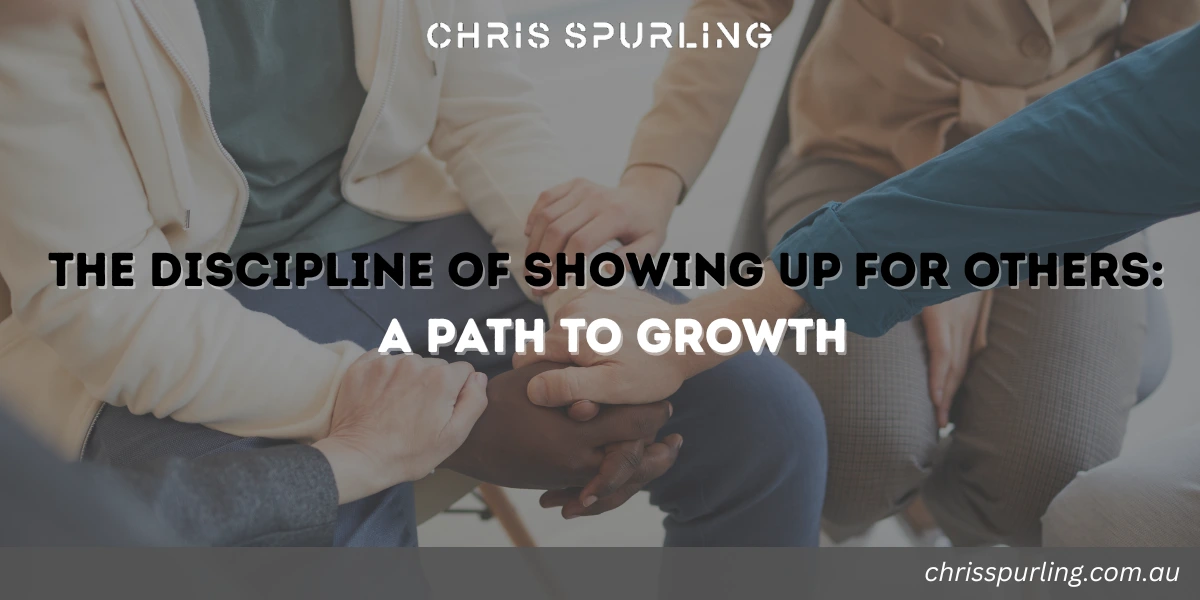
The discipline of showing up for others is one of the most overlooked drivers of personal growth. It is easy to commit when things feel convenient. It is harder to remain present when energy is low, schedules are full, or recognition is absent. Yet this is where real growth happens.
Showing up consistently is not about people-pleasing or self-sacrifice. It is about responsibility, reliability, and character. When you show up for others with discipline, you strengthen trust, deepen connection, and develop internal standards that shape long-term growth.
This article explores why the discipline of showing up for others is essential for growth and how consistency, purpose, mindset, and service work together to build lasting impact.

1. Showing up consistently builds trust and credibility
Trust is not built through words alone. It is built through repeated actions over time. When you show up consistently, people learn that you are reliable, even when conditions are not ideal.
Consistency communicates respect. It shows others that their time, effort, and presence matter. This is true in relationships, work, and community involvement.
Daily consistency reinforces:
- Reliability under pressure
- Emotional safety
- Stronger relationships
- Long-term credibility
This principle connects directly to consistency habits that last, where showing up is treated as a foundational behavior rather than a reaction to motivation.
The discipline of showing up for others begins with keeping small commitments consistently.
2. Discipline transforms intention into action
Many people care deeply about others but struggle to follow through. Good intentions without discipline often lead to disappointment, both for others and for yourself.
Discipline bridges the gap between intention and action. It removes reliance on mood and replaces it with standards. When discipline is present, showing up becomes automatic rather than optional.
Discipline supports showing up by:
- Reducing emotional negotiation
- Creating predictable behavior
- Reinforcing self-trust
- Preventing avoidance during discomfort
This shift from intention to action is where growth accelerates. The discipline of showing up for others trains you to act in alignment with your values, even when effort feels inconvenient.
3. Purpose gives meaning to consistency
Showing up becomes sustainable when it is tied to purpose. Without purpose, consistency can feel draining. With purpose, effort feels meaningful.

Purpose reframes showing up from obligation to contribution. You are no longer doing something because you have to, but because it aligns with who you want to be.
This connection between discipline and meaning is explored through purpose through service. When service is rooted in purpose, showing up becomes a source of growth rather than burnout.
The discipline of showing up for others is strongest when contribution is intentional, not transactional.
4. Mindset shapes how responsibility is experienced
Mindset determines whether responsibility feels heavy or empowering. When showing up is viewed as a burden, resentment builds. When it is viewed as a choice aligned with values, growth follows.
A strong mindset reframes responsibility as an opportunity to lead, support, and grow. This mental shift makes consistency easier to sustain over time.
The role of mindset in decision-making and responsibility is reinforced through how mindset shapes daily decisions. When mindset is aligned with purpose, discipline becomes more natural.
The discipline of showing up for others strengthens when responsibility is chosen rather than resisted.
5. Service-driven environments reinforce disciplined behavior

Environment influences whether discipline is reinforced or eroded. When service is valued within a community, showing up becomes part of identity rather than effort.
Service-driven environments create:
- Shared responsibility
- Mutual accountability
- Stronger relationships
- Sustainable contribution
This is especially visible in real-world contexts where service and growth intersect. The importance of community and environment is explored through growth through service in Brisbane, where showing up is shaped by long-term involvement rather than short-term recognition.
The discipline of showing up for others grows stronger when environment supports contribution.
How showing up for others drives personal growth
Showing up consistently for others does more than strengthen relationships. It builds internal discipline, emotional resilience, and character.
Growth emerges through:
- Keeping commitments even when it is inconvenient
- Acting in alignment with values
- Developing reliability under pressure
- Strengthening emotional regulation
- Building trust through action
Over time, these behaviors shape identity. You become someone who can be counted on, including by yourself.
Research supports this connection. The World Health Organization highlights that strong social connections and consistent supportive behavior contribute to emotional well-being, resilience, and long-term mental health. Their guidance on strengthening mental health and resilience reinforces why showing up for others supports growth.
Why the discipline of showing up for others leads to growth
The discipline of showing up for others works because it aligns behavior with values. It removes reliance on motivation and replaces it with consistency and purpose.
This approach:
- Builds trust through action
- Strengthens personal discipline
- Reinforces meaningful contribution
- Supports emotional resilience
- Encourages long-term growth
Growth is not only about personal achievement. It is also about reliability, responsibility, and contribution.
The discipline of showing up for others shows that when consistency is applied to service, growth becomes inevitable. Not because it is easy, but because it is intentional.
True success is measured by impact. Lead with integrity. Give before you take. Learn how service strengthens character and leadership in the Chris Spurling Service & Contribution Guide.
Your growth does not stop here.
Explore the Growth Hub for more lessons, stories and actions that build real change.
Go to the Growth Hub