Introduction
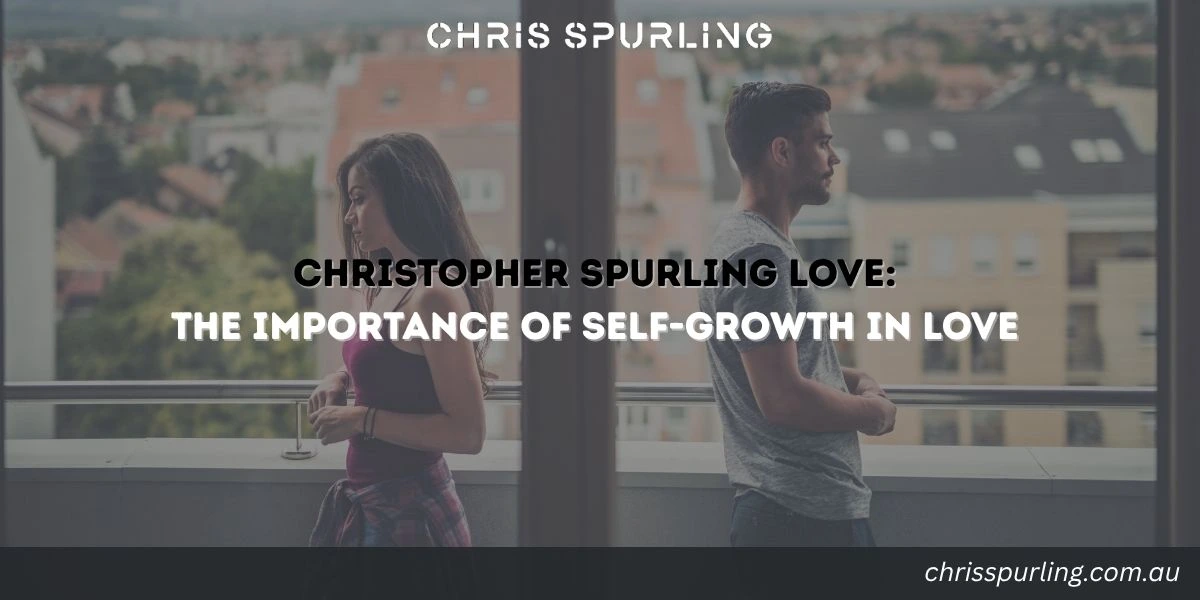
Love is often spoken about in terms of connection, attraction, and commitment, but one part of it does not get enough attention. Christopher Spurling Love is not only about finding the right person or building a strong relationship with someone else. It is also about becoming a healthier, more grounded version of yourself within that relationship.
A lot of people enter love hoping it will fix what feels unsettled inside them. They look for reassurance, stability, healing, or identity through another person. While love can absolutely be supportive, it was never meant to replace self-growth. When personal growth is missing, even a meaningful relationship can begin to carry pressure it was never designed to hold.
That is why self-growth matters so much in love. It helps you understand your own patterns, communicate more honestly, and show up with more maturity. It allows love to become something shared rather than something depended on for your entire sense of worth. When you grow as a person, the relationship has a much better chance of growing in a healthy direction too.
Love is stronger when you know yourself

One of the biggest challenges in relationships is that people often expect clarity from another person before they have built clarity within themselves. They want to be understood deeply, yet they have not spent enough time understanding their own emotions, triggers, needs, and habits.
Self-growth begins with self-awareness.
If you do not know what you need, it becomes harder to express it clearly. If you do not recognise your own patterns, it becomes easier to repeat them. If you do not understand what affects your reactions, small issues can quickly turn into bigger relationship problems.
This is why self-awareness matters so much in love. It helps you become more honest with yourself before expecting emotional maturity from someone else. It allows you to pause and reflect instead of reacting from insecurity, fear, or habit.
A stronger relationship is often built by two people who are willing to look inward, not just outward. The more you understand yourself, the more clearly you can participate in love without constantly losing your balance in it.
Self-growth helps you love without losing your identity
Love should bring closeness, but it should not erase identity. One of the most overlooked parts of healthy love is staying connected to who you are while building something meaningful with another person.
Without self-growth, people sometimes start shrinking themselves to keep the relationship comfortable. They stop voicing what matters to them. They ignore red flags. They give up personal goals. They become so focused on preserving connection that they slowly disconnect from themselves.
That is not sustainable.
Healthy love does not ask you to disappear. It asks you to grow in a way that makes connection deeper, not smaller. This is why relationship standards are important. Standards are not about being rigid or unrealistic. They are about respecting yourself enough to know what healthy love should feel like and what kind of behaviour should not be normalised.
Self-growth helps you protect that line. It teaches you that love is not proven by self-abandonment. It is strengthened by honesty, boundaries, self-respect, and maturity. The person you become within a relationship matters just as much as the relationship itself.
Growth changes the way you communicate in love

Many relationship struggles are not caused by lack of care. They are caused by a lack of emotional maturity in communication. Two people may genuinely care about each other, but if they do not know how to express themselves well, handle conflict, or listen without defensiveness, love can begin to feel heavier than it should.
Self-growth improves communication because it changes how you respond.
Instead of speaking only from frustration, you become more thoughtful about what is actually underneath it. Instead of expecting your partner to read your mind, you become clearer in how you explain what you feel. Instead of escalating every difficult conversation, you become more willing to pause, reflect, and respond with more discipline.
That is why communication in love remains one of the most important parts of any healthy relationship. Communication is not only about saying more. It is about understanding yourself well enough to say the right things more honestly and more calmly.
Growth does not make every conversation easy, but it does make them more constructive. It helps love feel safer because both people become better at handling the truth with care.
A healthy relationship cannot carry all of your healing alone
One of the most unfair expectations people sometimes place on love is expecting it to heal everything they have not faced within themselves. They want the relationship to remove insecurity, fix old wounds, settle identity struggles, and provide constant emotional certainty.
That creates pressure.
A loving relationship can support healing, but it cannot do all the work for you. Personal healing, emotional responsibility, and self-development still matter. Without those things, even love can start feeling exhausting because one person is being asked to carry more than a partner should.
This is where love and growth becomes such an important idea. Love and growth are not separate. They should work together. A relationship becomes healthier when both people are willing to keep growing, healing, and taking responsibility for themselves instead of placing the entire emotional weight on each other.
Research in relationship psychology also continues to show that self-development, emotional regulation, and secure communication habits contribute to stronger relationship satisfaction over time, which is why resources from The Gottman Institute remain so valuable for understanding healthy relational patterns.
When growth is present, love becomes more balanced. It becomes less about emotional dependence and more about partnership.
Self-growth makes love more stable over time

Attraction may begin a relationship, but growth is often what helps sustain it. Over time, every relationship will face stress, change, disappointment, and transition. If both people stay stagnant, the relationship often struggles to adapt. But when growth remains active, the relationship becomes more resilient.
Self-growth helps you stay open to learning. It helps you become less reactive, more reflective, and more capable of handling real life with another person. It strengthens patience. It improves perspective. It teaches you that love is not just about how you feel in easy moments, but also about how you carry yourself in difficult ones.
This is where goals and love can matter in a practical sense. Love works better when people are growing individually while also staying aligned in what they are trying to build together. Shared direction becomes easier when both people are still developing with intention.
That kind of love feels steadier. It is not built on fantasy. It is built on two people continuing to become better, wiser, and more grounded as life unfolds.
Final reflection
Christopher Spurling Love is not only about connection with another person. It is also about the kind of person you are becoming within that connection. Self-growth matters because it shapes how you communicate, what you tolerate, how you handle conflict, and whether you can love without losing yourself.
A healthy relationship should not stop your growth. It should support it. And your own growth should not pull you away from love. It should help you show up in it more honestly and more maturely.
That is why self-growth is so important in love. It makes love stronger, steadier, and more real. Not because it makes you perfect, but because it helps you participate in love with more self-awareness, self-respect, and emotional clarity.
Strong relationships require presence, honesty, and effort. Communicate clearly. Choose respect daily. Learn how to build trust and emotional strength in the Chris Spurling Relationships Guide.
Your growth does not stop here.
Explore the Growth Hub for more lessons, stories and actions that build real change.
Go to the Growth Hub